Military Equestrian Competitions
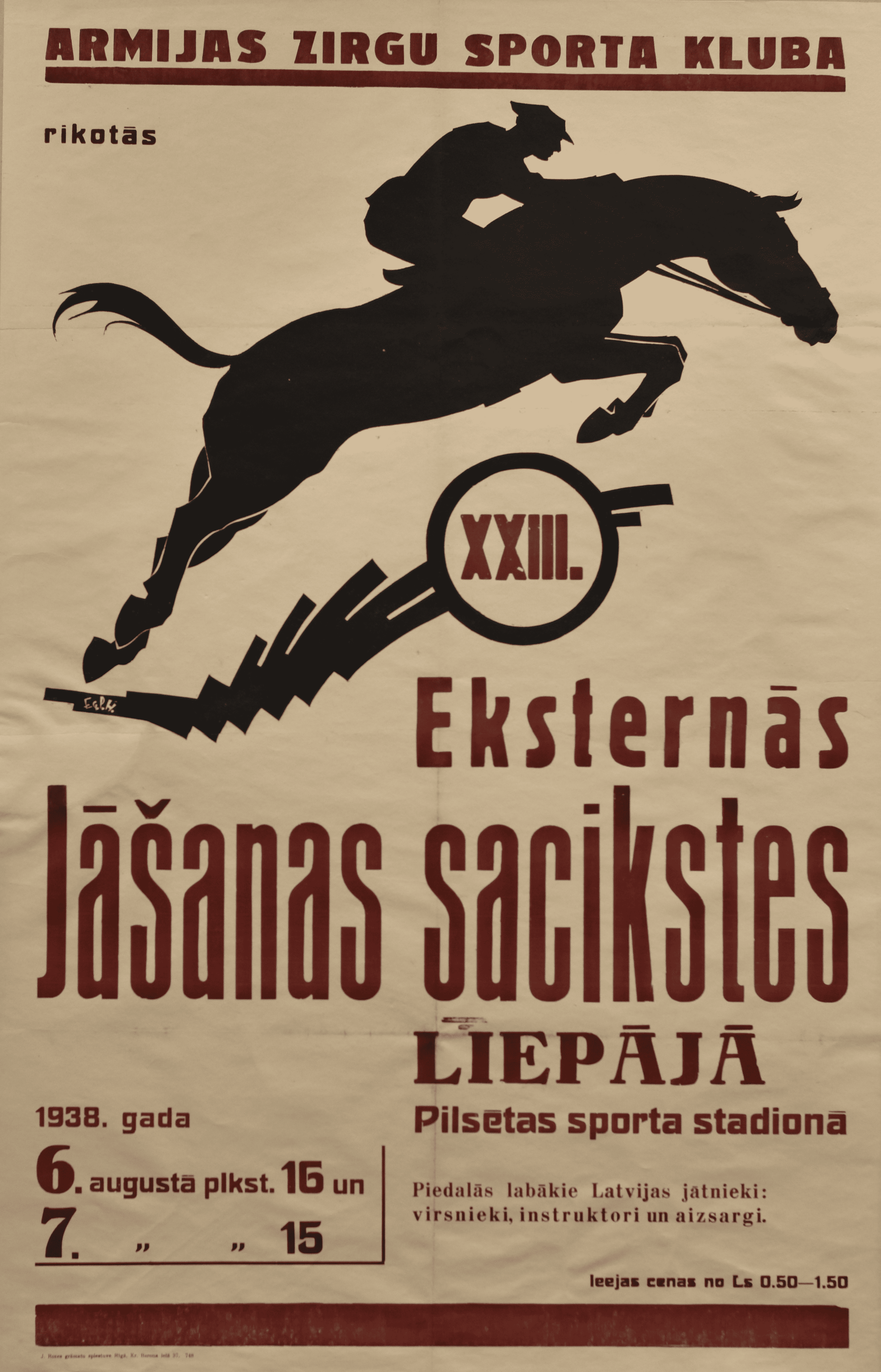
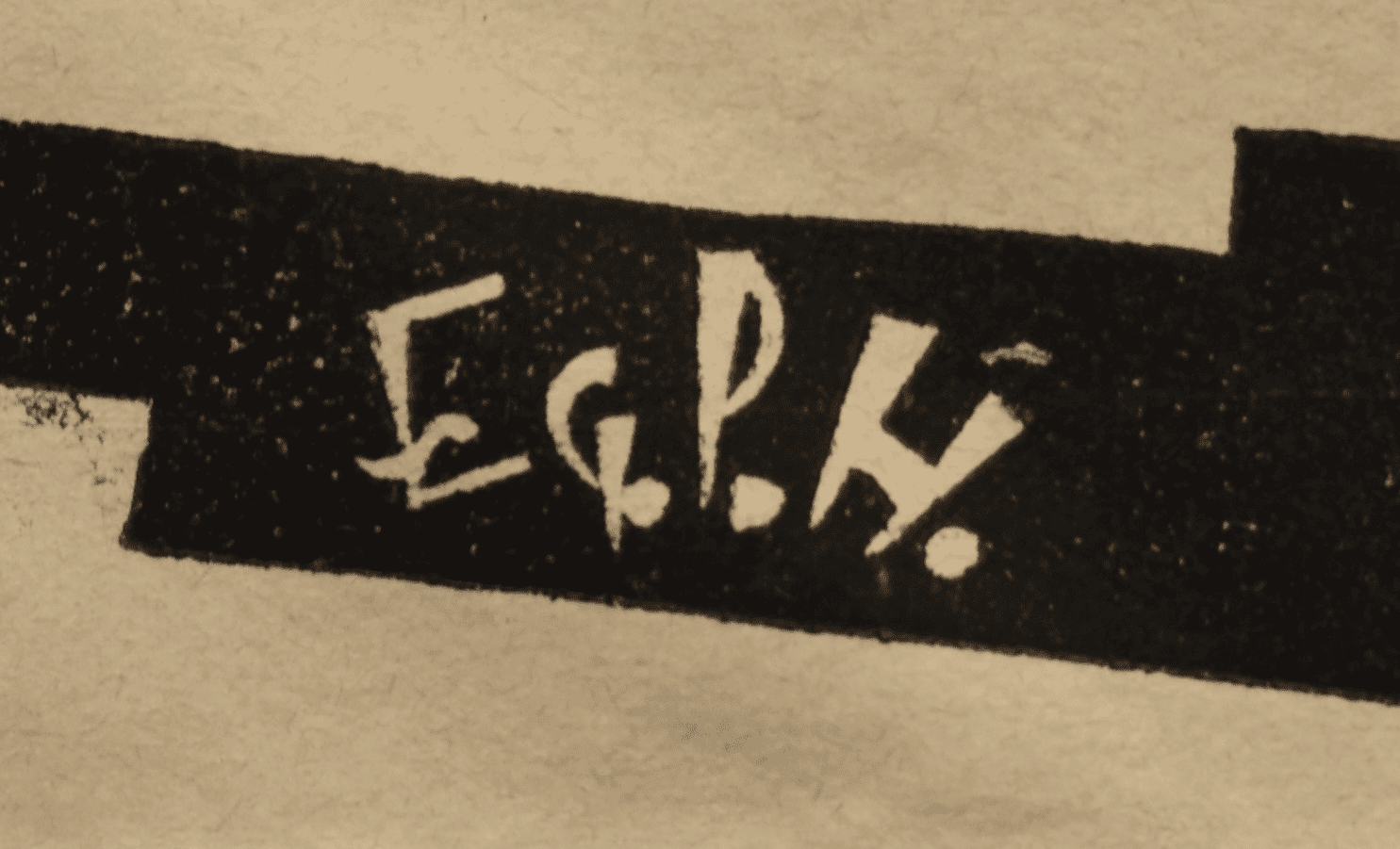

| AUTHOR | Egils Hermanovskis |
| PERIOD | 1938 |
| TECHNIQUE | Poster |
| SIZE | 92x60 cm |
| PRICE | For sale from mid-2025 in The Hague |
Egils Hermanovskis
Biography
Latvian architect, designer, and artist Egils Hermanovskis was born on March 13, 1918, in Viljandi (Estonia). His father, Teodors Hermanovskis (1883–1964), was a civil engineer and the first Minister of Transport of the Republic of Latvia. The family raised three other talented sons: artists and graphic designers Askolds Hermanovskis (1912–1967) and Gunārs Hermanovskis (1914–1969), as well as architect Vidvars Hermanovskis (1922–1990).
From 1938 to 1944, Egils Hermanovskis studied architecture at the University of Latvia. At the same time, in 1940, he completed a three-year art school program in just one year under the guidance of the renowned artist and professor Vilhelms Purvītis (1872–1945). From 1940 to 1941, he worked as the art editor of the magazine “Atpūta” where he was also involved in illustration work.
In 1941, together with his father, he opened an art gallery and an architectural office in Rīga. During World War II, in 1944, Hermanovskis fled the country with his family and emigrated to Germany, where he continued his studies at the Technical University of Stuttgart. In 1947, he moved to New York, where he eventually settled.
In the United States, he began an active career as an architect, designing both residential buildings and interiors. In 1963, he opened his own art gallery “Studio H. Gallery” in Manhattan.[1] [2]
Artistic style
Hermanovskis worked in both oil and watercolor. After moving to the United States, he turned his focus to expressive, realistic depictions of rural and urban landscapes, figurative compositions, and still-lifes. His work also included semi-abstract, structured paintings and symbolic surrealistic images. In the 1970s, he began a series of philosophical paintings about the infinity of space. Attention was also paid to the difficult fate of the Latvian people, especially the themes of war and refugees.
As an architect, Hermanovskis designed both private homes and public buildings: offices, restaurants, clubs, shopping and sports centers. In his architectural designs, he tried to create spacious, open, and undivided spaces that would blend in with the surroundings, regardless of the building’s shape. He got a lot of awards and recognition for his architectural and interior designs.[3]
Interesting Facts
Hermanovskis enjoyed skiing and became the Latvian champion in 1940.
All four brothers were famously known as the “legendary Hermanovskis brothers”, who introduced and demonstrated a new, unconventional lifestyle, artistic expression, and fashion in Rīga. Followers of their style were popularly referred to as “the indifferent ones”. Their fashion was characterized by thick-soled shoes, slim trousers, tailored jackets, stylishly tailored hats, small mustaches, and indifferent expression.
During the German occupation, in January 1944, Hermanovskis was arrested for artworks exhibited in his gallery that the authorities deemed “degenerate”, and he spent six months in the Salaspils concentration camp.
His unconventional architectural ideas were later compiled and published in 1982 in the book “101 Original Award Homes & Innovations”.[4]
_____________________________
[1] Apsītis V., Konstants Z. Hermanovskis, Egils // Māksla un arhitektūra biogrāfijās I / Atb. red. A. Vilsons. Rīga: Latvijas enciklopēdija, 1995.–200. lpp.
[2] https://www.literatura.lv/personas/egils-hermanovskis (Vd. 12.07.2025)
[3] Apsītis V., Konstants Z. Hermanovskis, Egils // Māksla un arhitektūra biogrāfijās I / Atb. red. A. Vilsons. Rīga: Latvijas enciklopēdija, 1995.–200. lpp.
[4] https://www.literatura.lv/personas/egils-hermanovskis (Vd. 12.07.2025)